
Your first 30 days, week by week — what to expect, and how to help it heal.
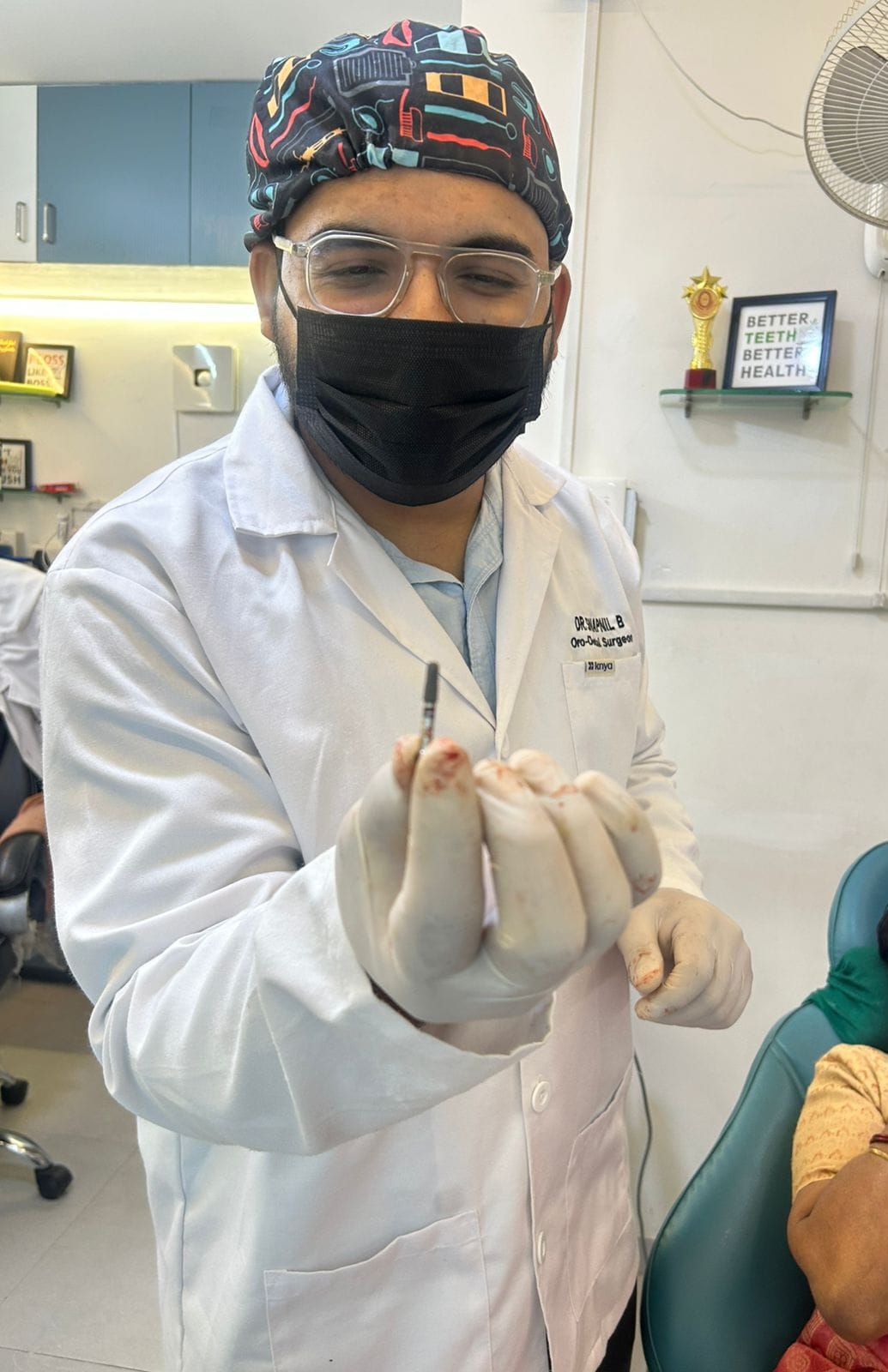
Every implant patient asks me the same thing right after the procedure: "So... now what?" Healing isn't a single event — it's a month-long process happening in stages, mostly invisible, as the implant fuses with your jawbone. Here's what that month actually looks like.
Mild swelling and tenderness are completely normal in the first 2–3 days — this is your body's natural response, not a sign of a problem. Stick to soft, lukewarm foods (think dal, khichdi, mashed vegetables), avoid the surgical site when brushing, and use only the rinse or medication prescribed. This is the week your body starts forming a blood clot around the implant that everything else builds on.
Swelling and discomfort should be gone by now, and you'll likely forget the implant is even there — which is exactly the point. Underneath the gum, though, the real work is just beginning: bone cells are starting to grow directly onto the titanium surface, a process called osseointegration. There's nothing to "do" here except keep the area clean and avoid chewing directly on that side.
The implant is now noticeably more stable than it was on day one, though it's still not ready for full biting force. This is when patients sometimes get overconfident and go back to their normal diet too early — resist that urge. Full osseointegration typically takes 3 to 6 months before the permanent crown is fitted, and this early fusion period sets the foundation for how strong that bond ultimately becomes.
From here, it's a waiting game — regular check-ins with us to confirm the bone is fusing properly, good oral hygiene around the site, and patience. When the implant is fully integrated, we move to fitting the crown, and at that point it functions, feels, and looks just like a natural tooth.
"The implant itself is placed in under an hour. The real work — fusing it permanently into your jaw — is done entirely by your own body, over the following months. Our job is just to protect that process."
– Dr. Swapnil Bade
Swelling or pain that gets worse after day 3–4 instead of improving, a persistent bad taste, fever, or any visible mobility of the implant should never be waited out — call us immediately so we can check it early.
Family Dental Clinic, Ravet offers full implant planning and aftercare follow-ups to keep your healing on track.